Beyond Dealer Transparency
Manufacturing

Thorben Wiedemann
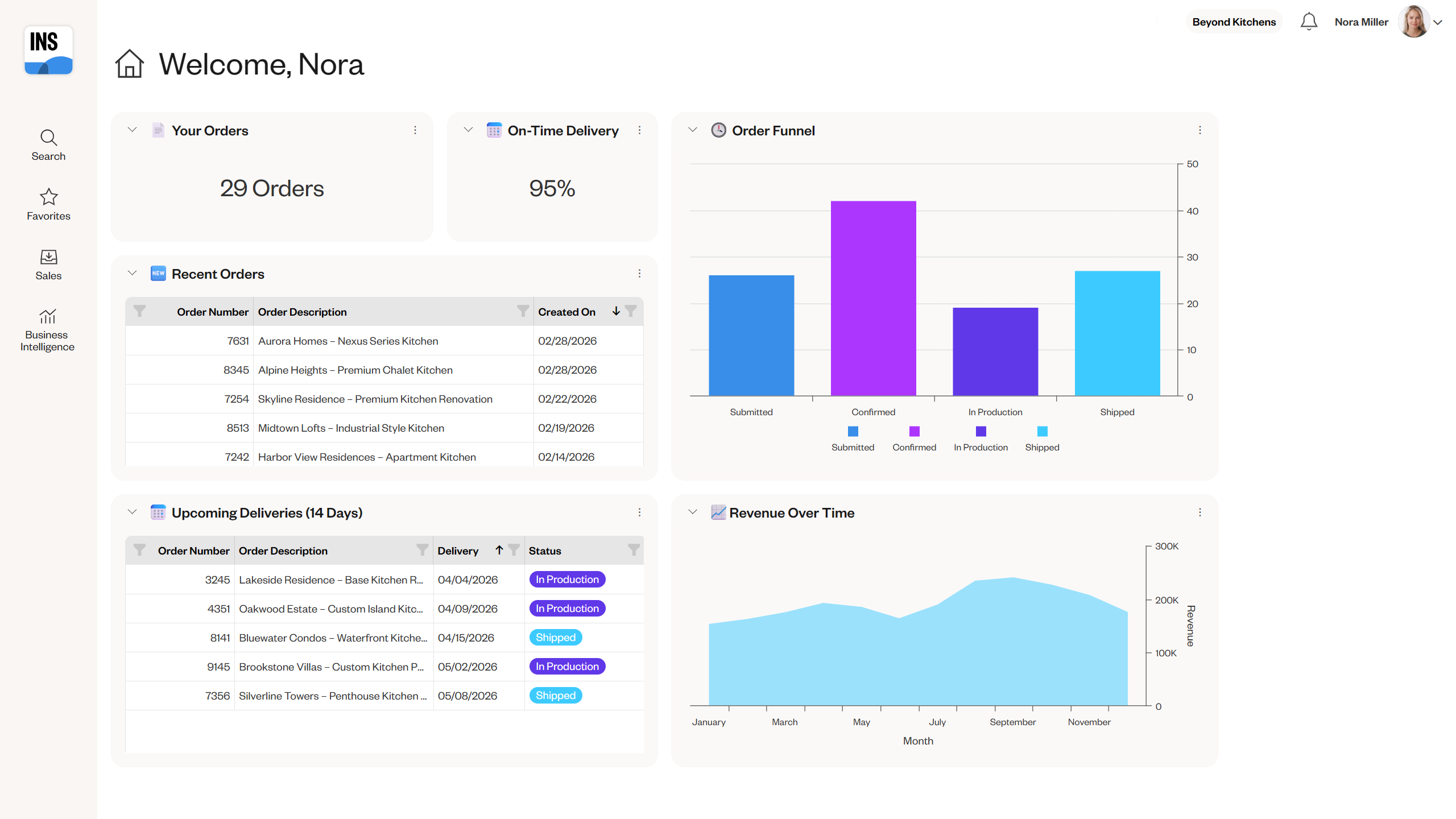
Why the Insight B2B Portal Is an Operational Platform, Not Just Another Portal
“Dealer transparency” is one of those phrases that sounds modern and responsible, right up until you translate it into what usually happens: someone builds a portal so dealers can stop asking so many questions.
That framing is convenient. It is also incomplete.
Because the real problem is not that dealers lack information. The real problem is that the manufacturer dealer relationship still runs on unstructured collaboration. Emails. Attachments. Phone calls. Spreadsheets. Status updates that depend on who you ask. Documents that live in inbox archaeology. Approval steps that happen in side conversations.
That is not collaboration. That is improvisation.
And improvisation does not scale.
The Friction Nobody Designed For
Most manufacturer dealer workflows were never designed. They evolved the way old cities evolve: layers built on layers, with narrow streets and hidden dead ends that made sense at the time.
Orders moved from phone calls to emails. Documents moved from fax to attachments. Status updates moved from hallway conversations to inbox threads with fourteen people copied “just in case.” ERP systems matured internally, but the external interface stayed stubbornly manual.
So everyone stays busy. And nobody feels fully aligned.
Dealers chase information instead of acting on it. Manufacturers answer questions instead of executing. Retail teams absorb uncertainty they cannot control. Operations teams manage exceptions instead of flow.
The cost is not just time. The cost is trust, predictability, and margin.
Transparency Is Not the Goal
Efficiency Is.
Transparency is only useful when it changes outcomes. When it reduces friction, removes guesswork, compresses decision cycles, and prevents avoidable work on both sides.
So the Insight B2B Portal is not about showing more.
It is about showing the right information, in the right context, at the right time, with the right guardrails.
For dealers, that creates confidence.
For manufacturers, that preserves control.
That combination is rare, and it is the difference between a portal that gets used and a portal that becomes another forgotten link.
The Problem With “Portals” That Have Been Around for Years
Here’s the part many organizations quietly learn the hard way: most portals built by agencies or custom teams are not operational platforms. They are intranets with a login screen.
They often look good on day one. Then reality arrives.
Because custom portals are usually bolted onto ERP, not built to extend it. They pull data through integrations, then store parts of that data or logic elsewhere to make the UI fast or the workflow manageable. Over time, that creates the one thing operations cannot afford: a second version of the truth.
When that happens, the portal becomes another system to maintain, reconcile, and explain. Statuses drift. Permissions become inconsistent. Documents get duplicated. Edge cases multiply. One or two people become the only ones who understand how it all works. Costs rise quietly. Trust erodes loudly.
Most custom portals are good at displaying data. They are bad at governing workflows.
And governance is the hard part.
A manufacturer does not need a prettier way to look at orders. A manufacturer needs a controlled way to run dealer collaboration at scale. That requires a dealer-facing status model that does not leak internal complexity, controlled catalog publishing, permissioned document sharing, and structured submission rules that keep bad orders from entering the system.
This is where most “portal projects” fail.
They optimize the interface. They do not change the operating model.
A Shared Operational Layer
The Insight B2B Portal introduces a missing layer between dealer and manufacturer: a structured collaboration layer grounded in Insight.
Not a replacement for ERP.
Not a consumer-facing experience.
Not an uncontrolled window into internal systems.
A shared operational layer that aligns retail and manufacturing around a single truth, while keeping governance intact.
Dealers gain clarity without complexity.
Manufacturers retain control without friction.
That balance is intentional. And it is what makes the portal different from a custom intranet solution.
What Retail Gains: Predictability That Drives Action
From a dealer perspective, the portal changes the daily rhythm of work.
Instead of operating on partial information, dealers have one place to track orders, review milestones, access the right documents, and understand what happens next. Status updates are consistent. Order history is visible. Communication becomes less reactive because the basics are no longer a mystery.
This is not transparency for curiosity.
This is predictability, which is the real currency in retail operations. Predictability is what lets dealers plan installs, manage customer expectations, and reduce the constant coordination tax that distracts teams from selling and servicing.
When workflows become predictable, dealers stop chasing and start executing.
What Manufacturing Gains: Scale Without Chaos
From a manufacturing perspective, the portal is a scale mechanism.
Inbound status questions become self-service. Documents are shared intentionally, not forwarded accidentally. External workflows stay clean and consistent. Submissions arrive in the structures and rules manufacturers already trust, guided by published catalogs rather than dealer interpretation.
This reduces service load, decreases corrections, and shortens cycles. More importantly, it lets manufacturers grow dealer networks without growing operational noise at the same rate.
Transparency becomes a cost-reduction lever, not a risk.
Clean Submission Matters as Much as Visibility
The other half of collaboration is submission, and it is where downstream cost begins.
Orders that arrive incomplete or inconsistent generate rework, delay production, and trigger exceptions that ripple through planning and execution. The portal grounds submission in Insight logic, ensuring that dealers submit orders through structured, validated workflows.
Whether through direct order entry or structured KIT file submission for manufacturer review, the goal is the same: orders that arrive production-ready, not problem-ready.
When submissions are clean, exceptions drop. When exceptions drop, operations can focus on flow.
This Is a Foundation, Not a Finish Line
The most strategic point about the Insight B2B Portal is that it is not an endpoint. It is infrastructure.
Once you establish a trusted collaboration layer with shared order context, structured statuses, controlled document exchange, and role-based permissions, new capabilities become feasible without rebuilding the foundation.
This is where the portal stops being “a portal” and becomes a platform.
The Natural Next Step: Real-Time Claims and Exception Management
One of the clearest evolutions is real-time claim and exception handling.
Today, claims often live in emails, PDFs, and disconnected systems. Ownership is unclear. Resolution is slow. Root causes are hidden behind anecdote and effort. The result is not just poor experience. The result is wasted operational energy.
With the portal as a structured foundation, claims can become contextual and measurable. Tied directly to orders and line items. Routed through clear submission and approval workflows. Tracked with real-time status and accountability.
This is not just a dealer experience improvement. It is operational learning.
Patterns emerge. Bottlenecks become visible. Preventable issues can be addressed upstream.
Over time, you move from handling problems to preventing them.
From Visibility to Operational Intelligence
The long-term trajectory is not just better tracking.
It is turning collaboration into intelligence.
Not just showing what happened, but highlighting where friction happens. Not just tracking orders, but identifying bottlenecks. Not just resolving claims, but reducing the need for them.
That is when collaboration becomes a competitive advantage.
Because the manufacturers who win are not the ones with the most data. They are the ones who turn data into flow with the least human effort.
The Bigger Picture
The Insight B2B Portal is not built for dealers alone. It is not built for manufacturers alone.
It is built for the relationship.
By replacing unstructured communication with controlled workflows, it reduces friction, protects margins, and creates a foundation for smarter collaboration across the network.
Transparency is simply the first step.
Efficiency, scalability, and continuous improvement are where it leads.
Share this article

Related blogs
From story pole to screen to machine: Roger Taylor’s legacy
 Manufacturing
24.10.2025
Discover the legacy of Roger Taylor, the mind behind Cabinet Vision and Mozaik Software, and how his innovations like “screen to machine” changed cabinet design and manufacturing forever.

Continuing my journey with the CKCA: Technology and the future of manufacturing
Kitchen
Manufacturing
14.08.2024
The CKCA is the voice of the Canadian kitchen cabinet industry – one that connects members to inspire progress, innovation and quality. That’s why I’m so happy to be kicking off my second three-year term on the Board of Directors.

The financial benefits of moving to the cloud
Manufacturing
Windows, Doors & Glass
08.08.2024
Learn about the financial benefits of moving to the cloud, including cost savings, predictable expenses, and reduced maintenance costs.