What the data from Q1 2026 tells us about flooring shoppers – and the opportunity for independent dealers
Flooring

Steven McMullen
Each quarter, Cyncly analyzes consumer behavior across our network of more than 2,000 independent flooring retailer websites to surface the trends shaping how people discover, research, and purchase flooring. This is the first installment of that report series, and we’re publishing it because we think independent dealers deserve the same quality of market intelligence that large chains have access to.
Here's what the Q1 2026 Flooring Industry Outlook Report showed us.
The numbers: a softer market, but a revealing one
Overall traffic was down across the network in Q1. Buyer website visits declined 21% compared to Q1 2025, phone call leads declined 22%, and online form submissions declined 5%. The macro context explains most of it: housing turnover – the primary demand driver for flooring – remains suppressed, and consumer confidence has stayed under pressure.
But within those numbers is a signal worth paying attention to. Phone calls fell four times faster than form submissions. That 4:1 ratio reflects a genuine behavioral shift: shoppers are doing more research online before they reach out. They are browsing product pages, comparing categories, reading care and installation content, and forming opinions about which dealer to trust, all before they are ready to talk to anyone. When they do make contact, it is increasingly through a form.
The category data rounds out the picture. Luxury Vinyl / Waterproof remains the most-browsed category at 39.1% of product page views, but lost 3.5 percentage points of share year over year — a sign of market maturation after a long growth cycle. Carpet was the most resilient category, gaining 3.1 percentage points of share and now accounting for more than one in four product page views. Laminate saw the steepest decline, losing 0.8 percentage points of share and falling to just 5.5% of overall views. Tile & Stone and Hardwood held steady, each holding or marginally gaining share.
What the findings mean for independent dealers
The form lead sitting in your inbox is more valuable than it looks. A shopper who contacts you via form has already done their research. They chose your business after completing it. If your follow-up is fast and informed – connected to what they were looking at on your site – you have a strong chance of converting them. If they wait until the next business day because nobody saw the enquiry, they have likely moved on.
Carpet's resilience points to something durable about the independent dealer model. Carpet is a category where the local relationship genuinely matters: fiber selection, pad recommendations, installation complexity. These are not things a shopper can resolve confidently on a big-box website. Independent dealers who do carpet well are holding their ground, and it reflects a real competitive advantage.
The finding that stood out most to me was the strong performance of educational content. Blog articles and content pages – carpet trends for 2026, water damage guidance, post-installation care – appeared among the most-visited pages across the network, competing directly alongside product catalog pages. A homeowner searching for help with a flooring problem is landing on a local dealer's website because that dealer wrote something useful. That is earned visibility at exactly the moment a buyer's intent is highest, and most competitors are nowhere near it.
The market conditions are genuine. But deferred demand does not disappear. Homeowners who paused renovation plans in 2025 have not cancelled them. As inventory loosens and life events force decisions, that backlog will convert. The dealers who are visible, credible, and responsive when it does will capture a disproportionate share of it.
Three things to do with this information
Make sure your website can participate in the research process. The data shows that shoppers are doing more work online before they contact anyone. If your product catalog is out of date, your navigation is difficult, or your pages have nothing to say beyond a phone number, you are being filtered out before the conversation starts. Cyncly Websites is built around this reality: a live product catalog connected to 400+ supplier brands, room visualization tools, and digital sample ordering give shoppers a reason to stay, explore, and engage. Homebase, the management layer dealers use to run everything, keeps catalog control, lead management, reputation, and reporting in one place, so maintaining a strong digital presence does not require a developer or a separate login for every tool.
Respond to every digital enquiry as if it came from your best customer. Form submissions are holding up because these shoppers are further along in their decision than a cold phone call. They chose to reach out. Fibi, the AI assistant built into Cyncly Websites, ensures that shoppers get a helpful response even when your team is not there: after hours, on weekends, whenever a buyer's research session happens. The conversation arrives in your Homebase lead inbox the next morning as a warm, structured lead with context attached. Speed and relevance in follow-up are what convert this kind of enquiry.
Invest in content that answers the questions shoppers are already asking. Trend guides, installation advice, and care content drove meaningful traffic across our network this quarter. A dealer who publishes practical, helpful content is visible at a moment when most competitors are not. Homebase includes an AI-assisted blog and content tool that makes this manageable – it generates draft content the dealer edits before publishing, building the kind of local SEO presence that earns high-intent traffic without requiring a marketing team to do it.
The full Q1 2026 Flooring Industry Outlook Report is available at https://www.cyncly.com/reports/flooring-Q1-2026. We will publish fresh data and analysis every quarter. If you want to know what it means for your business specifically, talk to our team.
Share this article

Related blogs
The flooring website that sells around the clock
 Flooring
4/16/2026
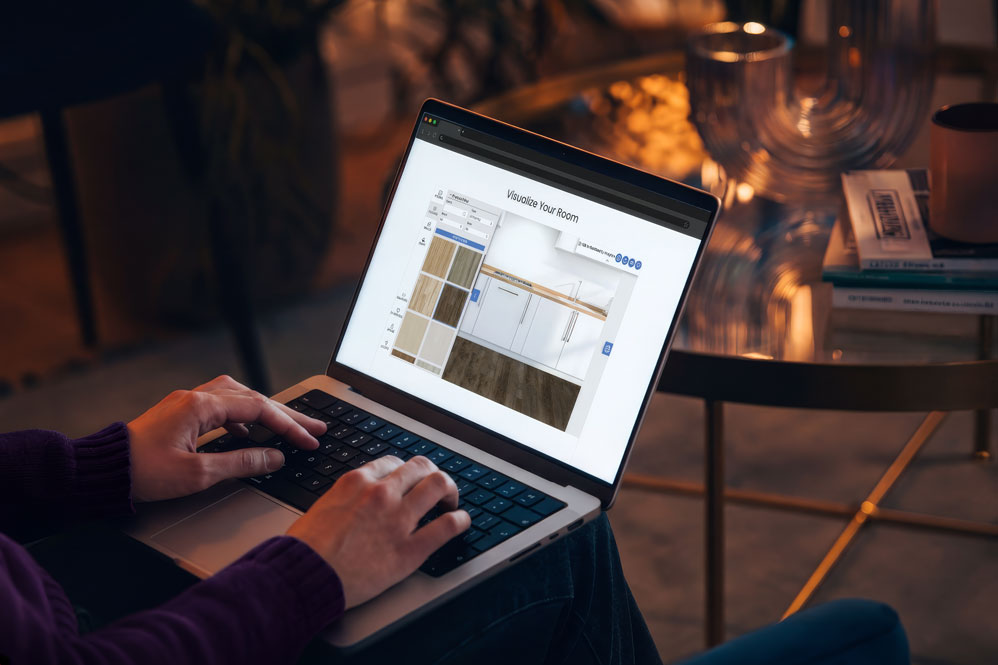
Flooring is one of the few retail categories where the sale still has to close in person. From a computer screen, a homeowner can't assess a product's texture, its behavior under their specific light, or whether it truly works in your space. But the journey to that in-person moment has fundamentally changed.
One year stronger: Connecting the Flooring industry
Flooring
12/10/2025
From day one, the Broadlume acquisition was about integration and empowerment. Both companies had envisioned a complete, integrated platform that helps companies sell faster, easier, and smarter. Together, our goal is to connect every flooring industry stakeholder—independent dealers, distributors, manufacturers, and consumers—through cutting-edge technology.

Secure payments, stronger business: How flooring retailers use payment security to build customer trust
Flooring
8/13/2025
Learn how secure, integrated payment solutions help flooring retailers protect against fraud, streamline transactions, and strengthen customer relationships.